Who We Are
ABI is a voluntary association governed by a Constitution.
It is a non-profit legal entity with elected leadership and member oversight. All income is applied solely to advancing its objectives .
We bring together:
Landowners and farmers
Conservation organisations
Fire and natural resource groups
Municipal and provincial government
Researchers and academic institutions
Businesses and community organisations
ABI is broader than any one organisation. It exists to galvanise the natural resources community and those who influence land, water, biodiversity and development decisions across the region.
ABI History
The Agulhas Biodiversity Initiative (ABI) landscape partnership has existed for nearly two decades and evolved through three main phases.
Phase 1 (2003–2010) began as a project funded by the Global Environment Facility and supported by the United Nations Development Programme, establishing ABI as one of seven landscape initiatives under the wider Cape Action for People and the Environment (CAPE) partnership. (Link to Evaluation)
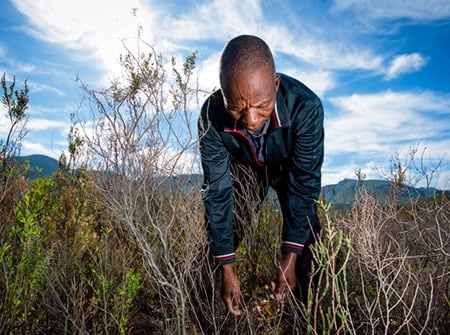
Phase 2 (2010–2020) saw the continuation of the stakeholder partnership as a voluntary association known as the “Agulhas Biodiversity Initiative in the Overberg,” guided by a constitution finalized in 2011 and governed by an elected committee that convened partners and coordinated activities. From 2013 to 2021, the ABI secretariat was hosted by the Flower Valley Conservation Trust on behalf of 53 partners, coordinating initiatives such as a Table Mountain Fund small grants programme and sustained efforts to clear invasive alien vegetation with landowner partners on the Agulhas Plain.
Phase 3 began through the “Way Forward for ABI” revisioning process, which repositioned the partnership to strengthen collaborative landscape stewardship, renew partner engagement, and align ABI’s role with emerging priorities for biodiversity conservation, sustainable land use, and inclusive local development across the Overberg. (Link to Revisioning Documents)
What We Do
The 5 Cs – How ABI Works
ABI is built around five critical elements:
Collaboration: Strengthening relationships and trust across sectors.
Coordination: Understanding who is doing what in the landscape and avoiding duplication.
Communication: Creating shared visibility of initiatives, priorities and opportunities.
Capacity: Enabling learning, knowledge exchange and collective problem-solving.
Capital: Mobilising funding and innovative financing for landscape-scale programmes.
Together,
these 5 Cs enable additive impact at a landscape level.
Where we work
THE OVERBERG -
A Connected Landscape
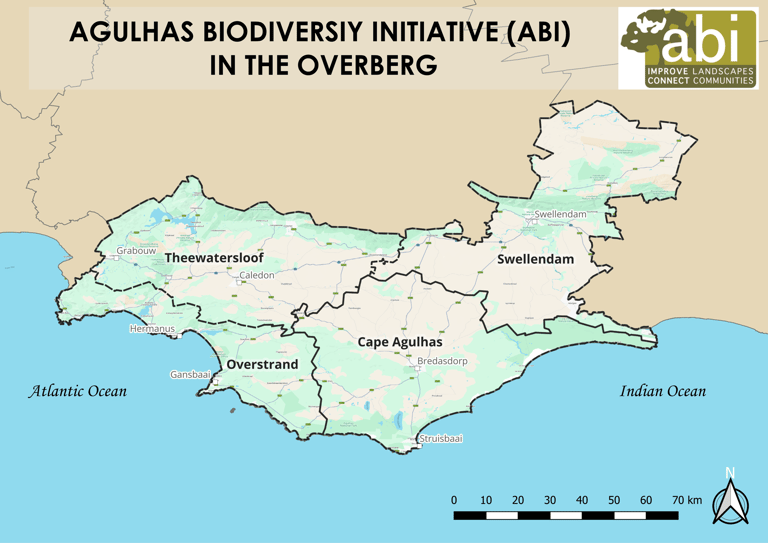
ABI operates across the four municipalities of the Overberg:
Cape Agulhas • Overstrand • Swellendam • Theewaterskloof
The Overberg is globally significant for its biodiversity and deeply interconnected social and economic systems.
This region includes:
Biodiversity Heartland
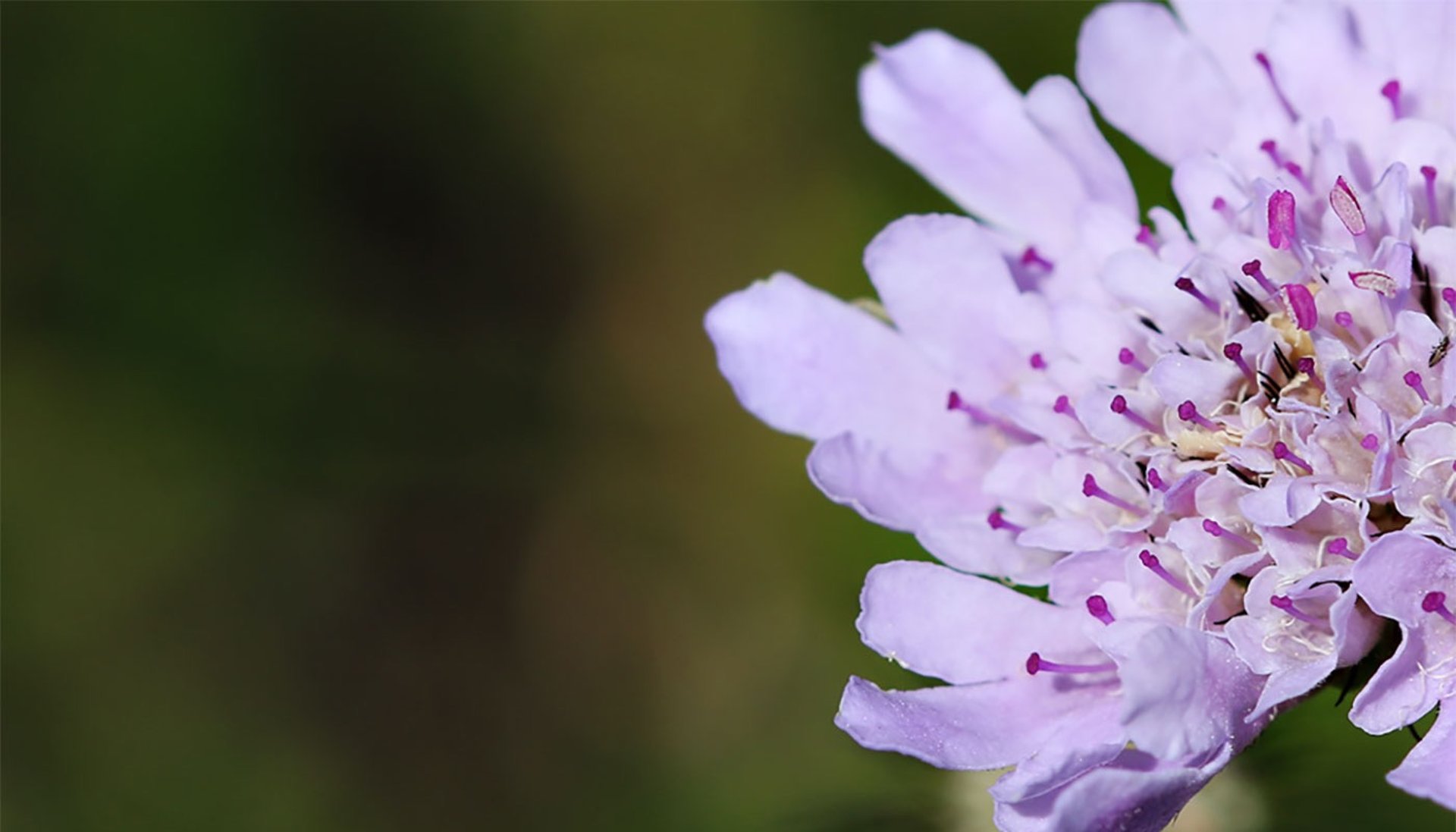
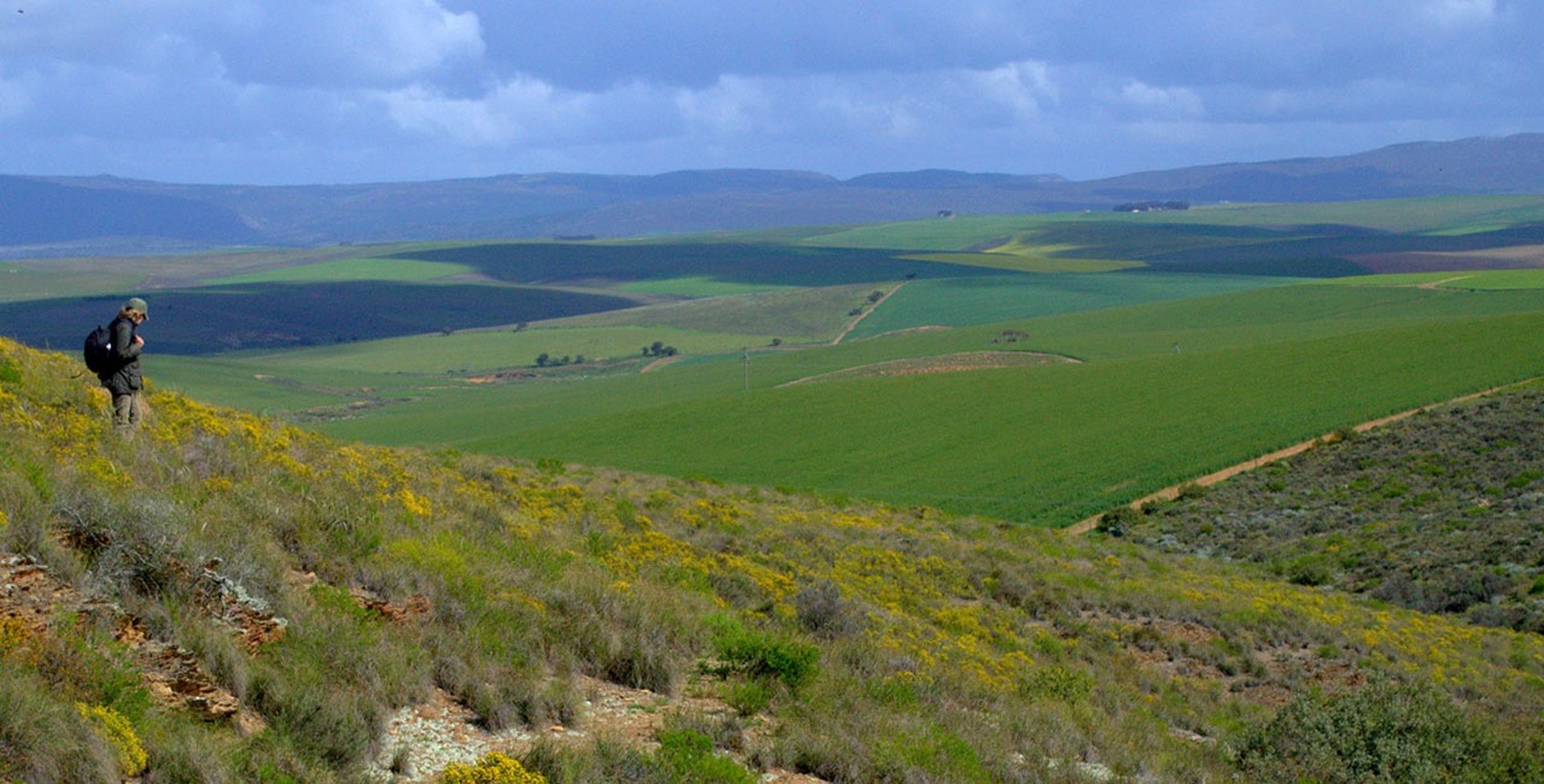
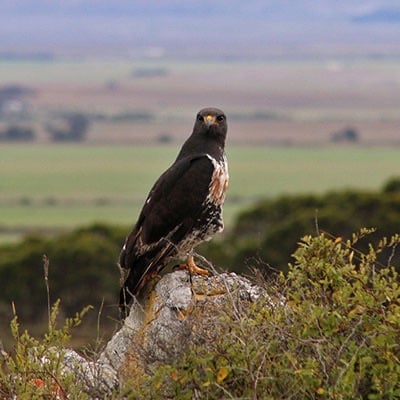
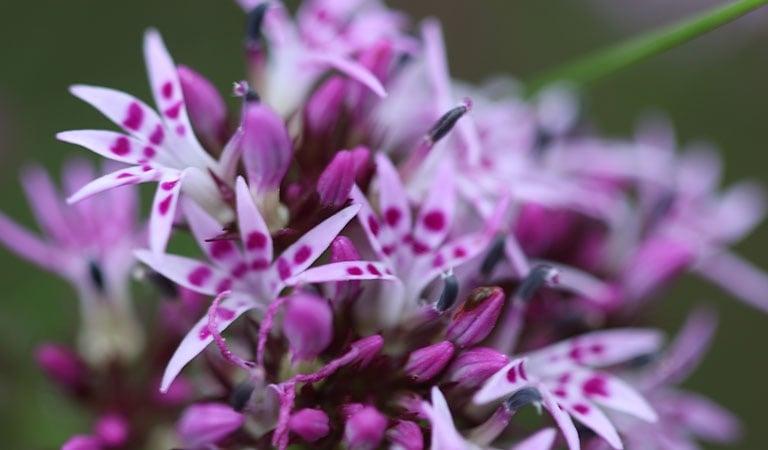
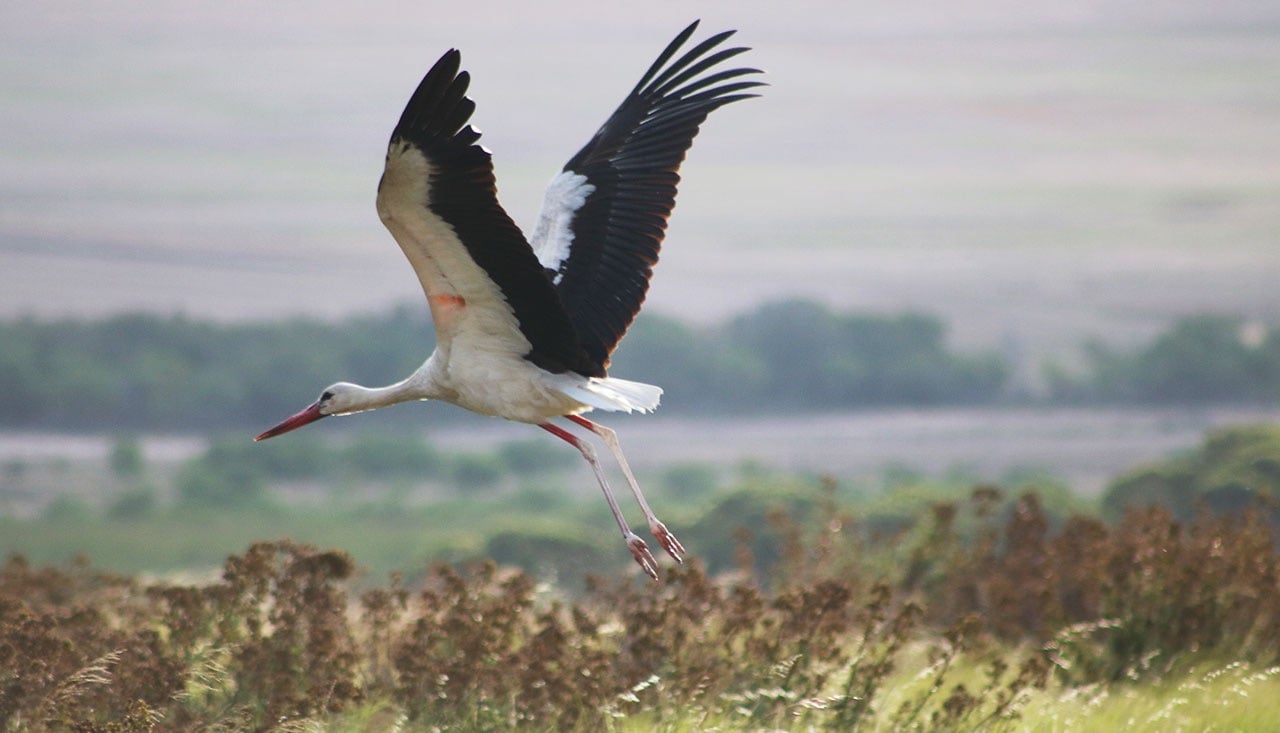
The Overberg is globally significant for its biodiversity. It includes critically endangered Overberg Renosterveld across the Rûens and mountain and coastal fynbos linked to the Riviersonderend Mountains and Agulhas Plain. These ecosystems form part of the Cape Floristic Region — one of the world’s biodiversity hotspots — and support extraordinary plant and animal diversity.
Rivers, Wetlands & Estuaries
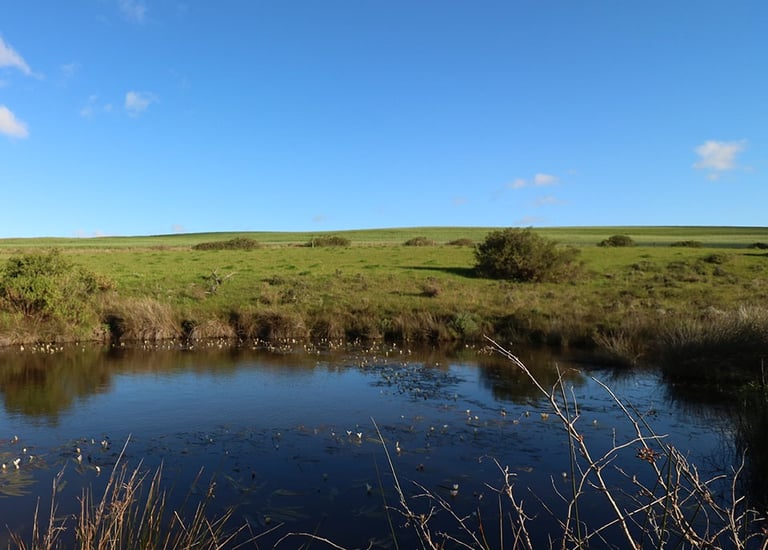
The landscape is shaped by major river systems such as the Breede River and its tributary, the Riviersonderend River. Important wetlands and estuaries — including Soetendalsvlei, De Hoop Vlei, the Breede River Estuary (Witsand) and the Klein River Estuary (Hermanus) — sustain biodiversity, agriculture, tourism and local communities.
Coast & Marine Systems
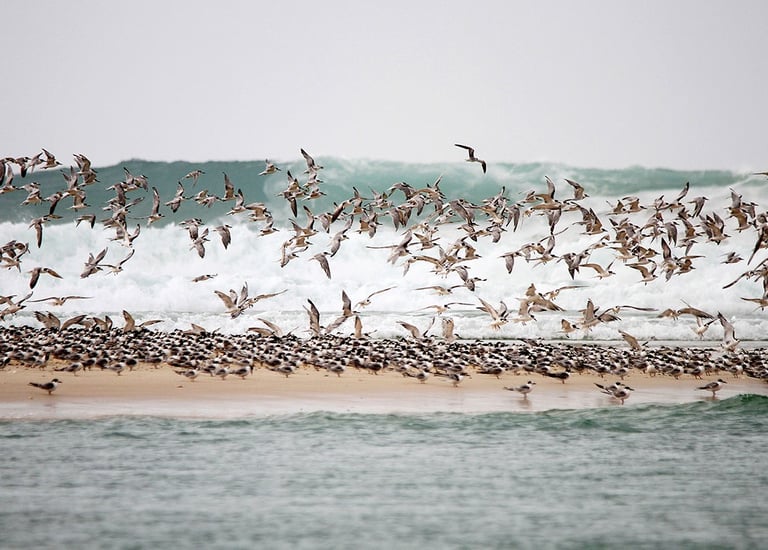
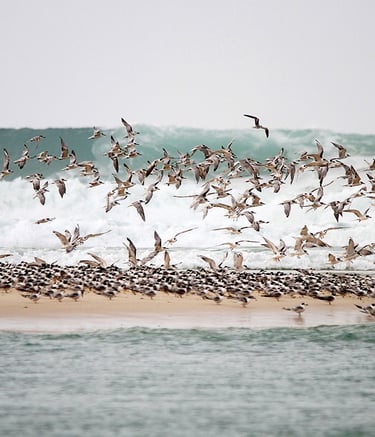
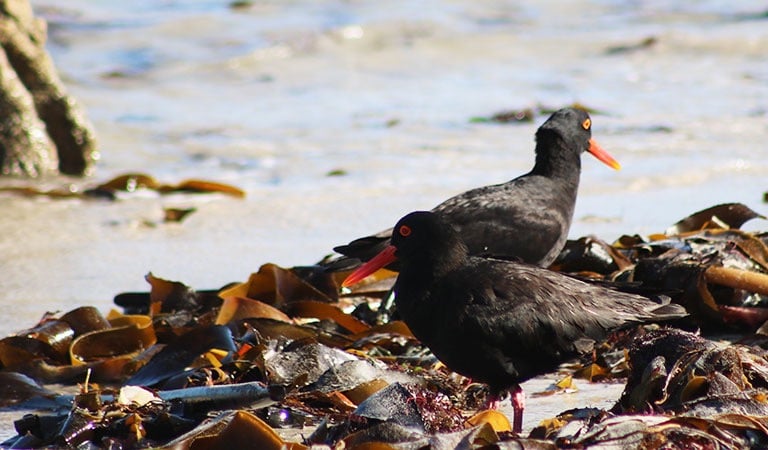
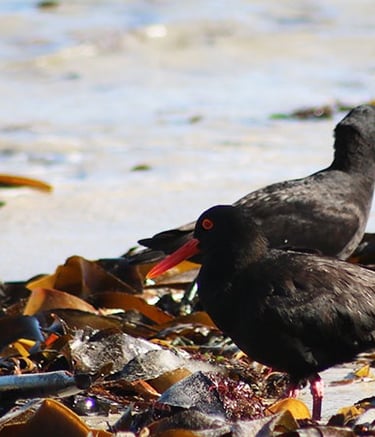
From Walker Bay to the southern tip at Cape Agulhas, the Overberg’s coastline connects terrestrial and marine ecosystems. These waters form part of the highly productive Agulhas Bank system, supporting fisheries, marine biodiversity and tourism, including globally renowned whale habitats.
Working Agricultural Landscape
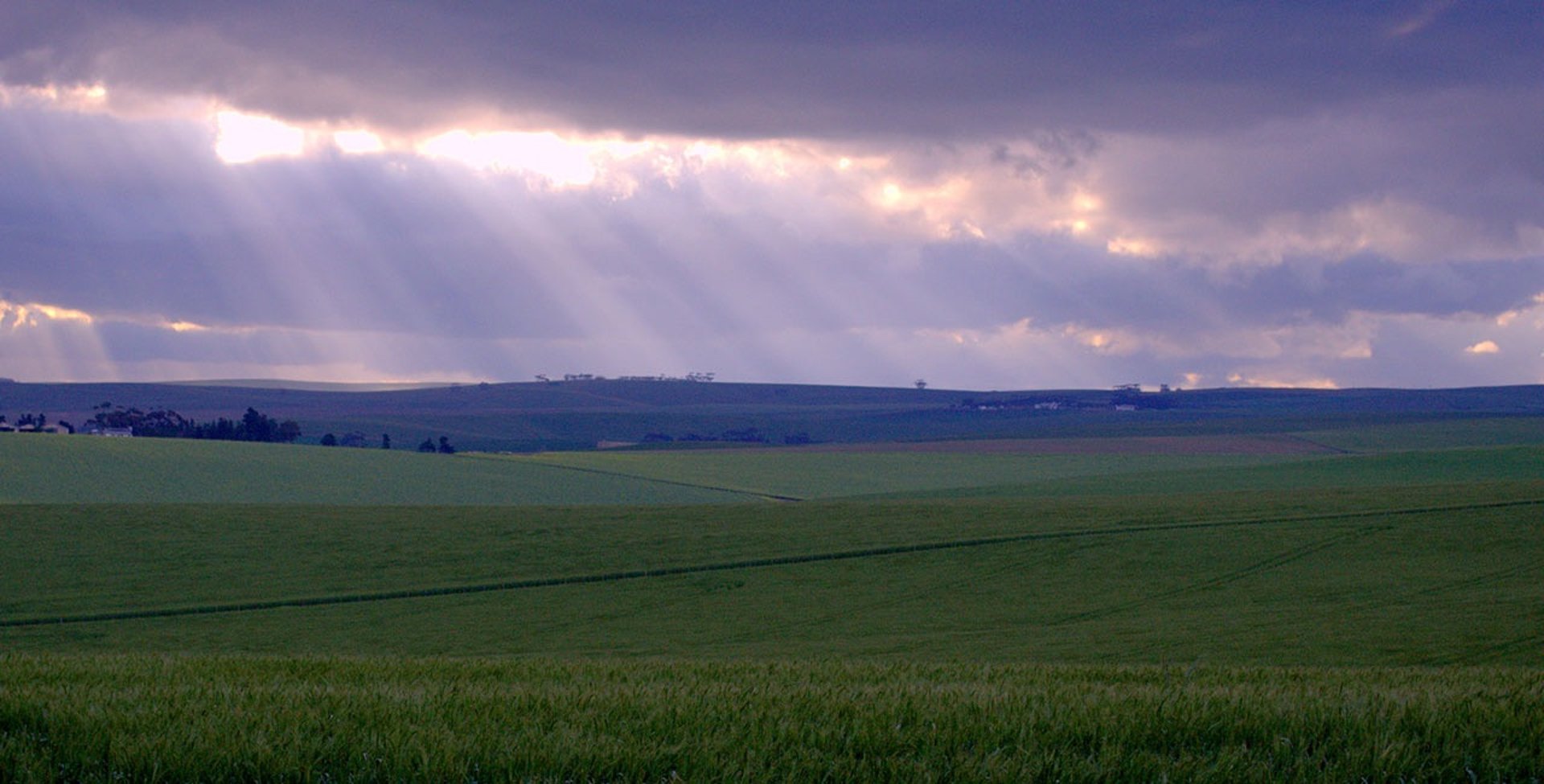
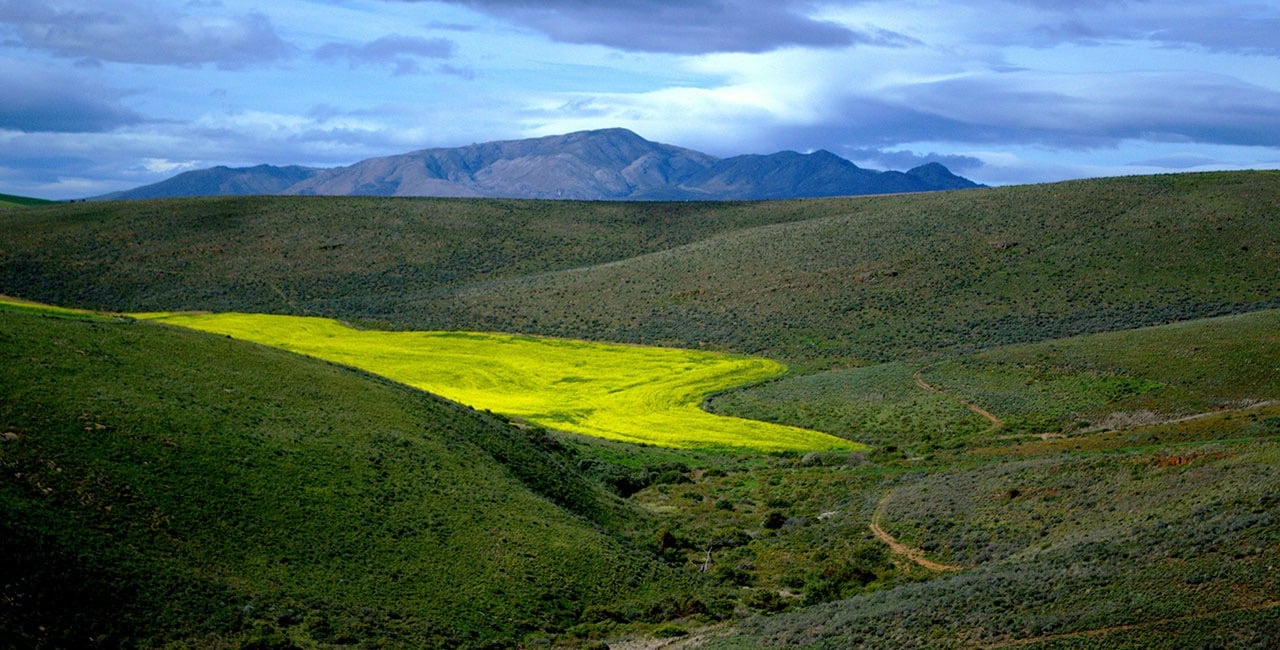
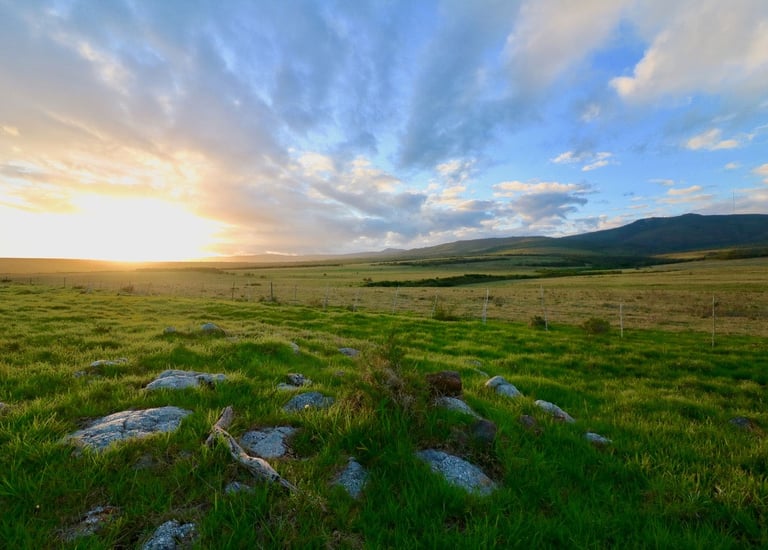
The Overberg is also one of South Africa’s most productive grain regions, known for wheat, barley and canola. Mixed farming systems coexist with conservation stewardship areas, all supported by strategic mountain catchments that supply water to farms, towns and downstream ecosystems.
Within the Overberg, biodiversity, agriculture, fire, water security and livelihoods are inseparable.